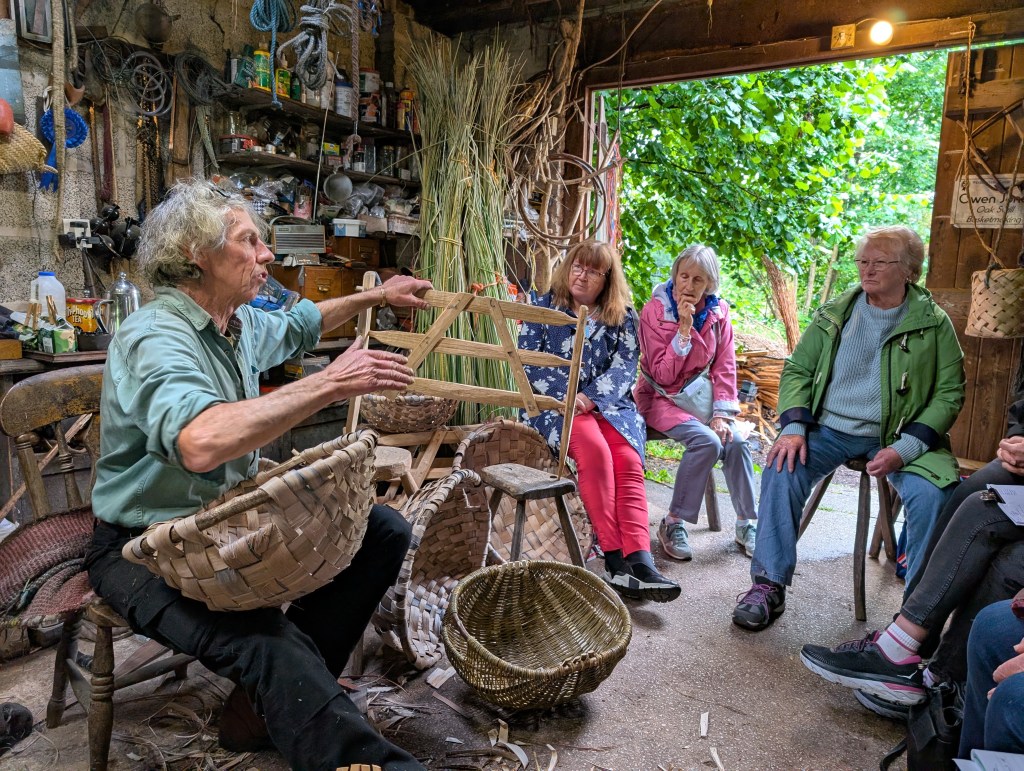
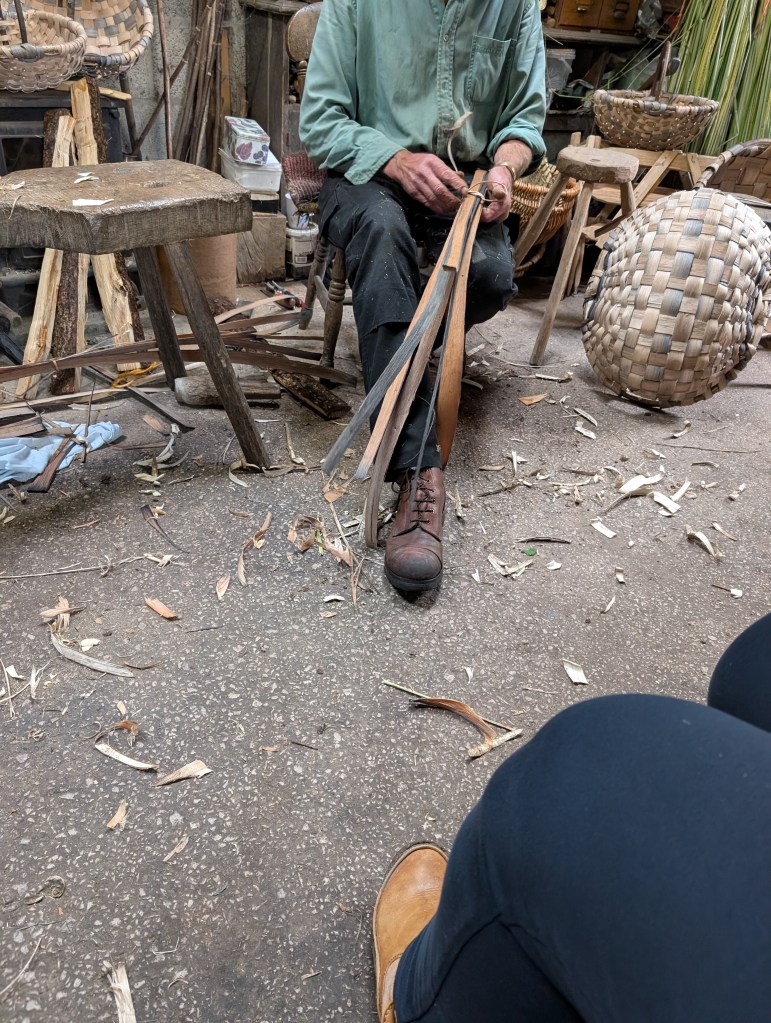

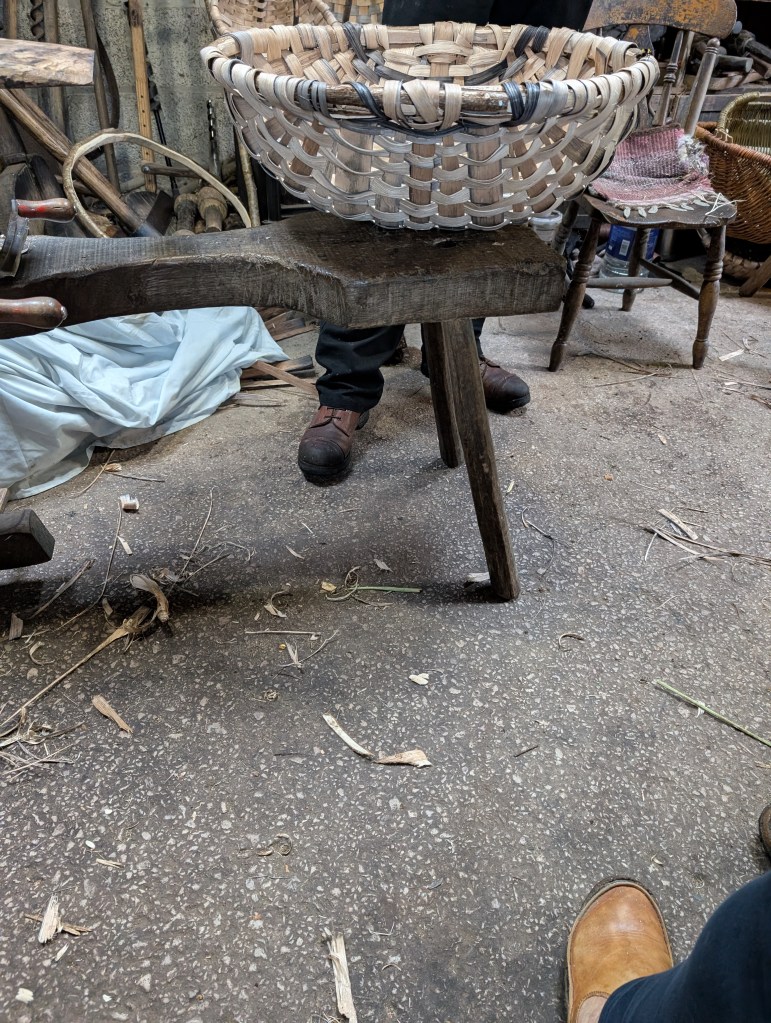

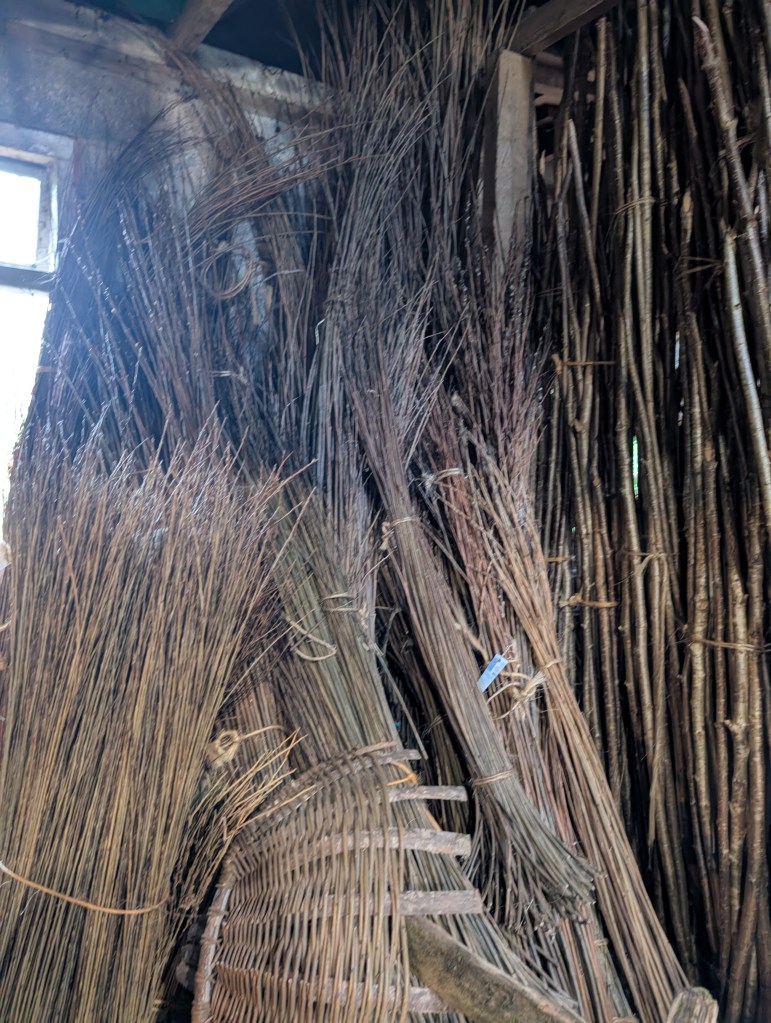
Owen Jones gave us a fascinating talk on ‘Swill’ making, from history, through harvesting of natural products (oak and hazel, sourced locally), to completion.
Owen discussed the history and craftsmanship of the swill basket, a traditional willow basket from the high furnace area in England. The baskets, made from oak and hazel, were used for various purposes, including farming and shipping. Jones learned the craft from John Barker in 1988 and emphasised the importance of selecting high-quality wood. The process involves boiling the wood to soften it, making the bulls, and dressing the ribs and spine. Jones highlighted the decline in coppicing practices, affecting the quality of wood available for basket making.
Jones discussed his 30-year journey in woodworking. He detailed the process of making various baskets, including the 22-inch lapping spell and the half-peck basket, using techniques like knot tar and square lashing. Jones also mentioned his involvement in beekeeping, which he believes helps prevent arthritis. He described his seasonal work, including January’s Hazel cutting and February’s Willow harvest, and his efforts to maintain traditional skills like oak bark peeling and rush hat making. Jones emphasised the importance of sustainable practices and the challenges of balancing traditional crafts with modern demands.
He also grows and harvests his own willow to make Welsh frame baskets, peels oak bark for a tannery in Devon (the last in the country to use oak bark, rather than synthetic materials), makes cleft oak gates and fencing/hurdles and harvests hazel for pea sticks, bean poles and line props, as well as making birch twig besoms.
He had just returned from 3 days of rush cutting in a river in Somerset, as he also makes Rush hats.
The talk centred on the traditional craft of willow basketry and its future prospects. Jones noted that while some crafts are not endangered, like willow basketry, others are rare and face challenges in finding apprentices. He mentioned having taught over 1,000 people, but only a few are actively engaged. The conversation also touched on the difficulty of sourcing wood and the importance of stewardship. Pricing of willow products was debated, with Jones emphasising affordability and cultural value over profit maximisation, contrasting with other craftsmen’s higher pricing. The legacy and value of traditional skills were highlighted, along with the personal satisfaction and challenges of maintaining these crafts.


 Rusland with Bouth Women's Institute